


 By Leo Canaparo. Tennis coach & Director TENNIS7.NET
For decades, Wimbledon was synonymous with speed. It was the tournament where powerful serves, lightning-fast reflexes, and flawless volleying ruled the courts. Grass rewarded aggression, short points, and daring net approaches. Players like Pete Sampras, Stefan Edberg, Boris Becker, Martina Navratilova, and Goran Ivanisevic built their legacies on a surface that favored attacking tennis above everything else.
Today, Wimbledon remains the sport’s most prestigious event, but it is no longer the same tournament from a playing perspective. The grass is slower, the ball bounces higher, and baseline rallies have become increasingly common. The transformation has been gradual, yet profound, fundamentally changing the way tennis is played at the All England Club.
One of the biggest turning points came in 2001, when Wimbledon switched from a traditional grass mixture to courts composed entirely of perennial ryegrass. The new surface proved more durable and consistent throughout the two-week tournament, but it also produced a higher and more predictable bounce than the old blend, which contained a significant percentage of creeping red fescue. The result was a court that became less slippery and slightly slower, reducing the overwhelming advantage once enjoyed by serve-and-volley specialists.
The grass itself is not the only factor. The tennis balls have also evolved over the years. Since Slazenger remains Wimbledon’s official ball supplier, subtle changes in ball manufacturing and regulations have contributed to slower playing conditions. Modern balls tend to fluff up more during rallies, increasing air resistance and reducing speed after only a few games. Combined with heavier racket technology and polyester strings capable of generating enormous topspin, players are now able to control powerful groundstrokes even on grass.
These developments have dramatically altered tactics. Twenty-five or thirty years ago, it was common to see players rushing the net after almost every first serve. Service winners and aces dominated the statistics, and many points lasted only two or three shots. Today, even the biggest servers often engage in extended rallies before finding an opening. The modern grass court rewards patience and movement almost as much as explosive serving.
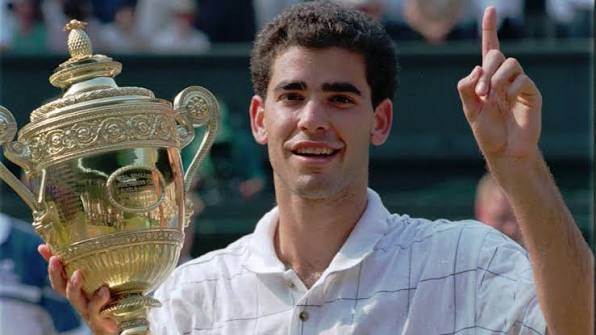
The evolution of Wimbledon can also be seen through its champions. Pete Sampras won seven titles by playing classic attacking tennis, often finishing points with crisp volleys after one powerful serve. Roger Federer initially enjoyed similar success with an all-court style, but as the courts slowed, even he adapted by spending more time behind the baseline. Novak Djokovic elevated defensive excellence and counterpunching into an art form, winning multiple Wimbledon titles while relying on extraordinary returning, flexibility, and consistency rather than relentless net attacks.
Even younger champions such as Carlos Alcaraz and Jannik Sinner have demonstrated that modern grass-court success depends on complete versatility. Both possess outstanding serves, but they also excel in long rallies, sliding into defensive positions, producing heavy topspin, and constructing points with patience—qualities that would have been less decisive on the lightning-fast courts of the 1990s.
Statistics reflect this evolution. Average rally lengths have increased, break points are more frequent, and return games have become far more competitive than during the serve-dominated era. The percentage of serve-and-volley points has declined dramatically, replaced by aggressive baseline exchanges where players use spin and athleticism to create opportunities.
Ironically, the changes have made Wimbledon more accessible to a wider variety of playing styles. Clay-court specialists and hard-court experts now arrive in London believing they can compete for the title, something that was far less common a generation ago. The gap between surfaces has narrowed, allowing the world’s best all-around players to thrive regardless of their preferred conditions.
Yet Wimbledon has not lost its identity. The pristine lawns, the all-white dress code, Centre Court, strawberries and cream, and the tournament’s rich traditions continue to define the Championships. What has changed is the tennis itself. The modern game has transformed the world’s most famous grass courts from a haven for serve-and-volley specialists into a stage where athleticism, adaptability, and all-around excellence are the keys to lifting the Gentlemen’s or Ladies’ Singles Trophy.
The grass is still green, the traditions remain timeless, but the style of tennis that conquers Wimbledon has evolved with the sport itself. What was once the fastest Grand Slam on the calendar has become a fascinating blend of tradition and modernity—where history still echoes, even as the game continues to change.